8 Free Health Calculators That Tell You More Than Your Scale
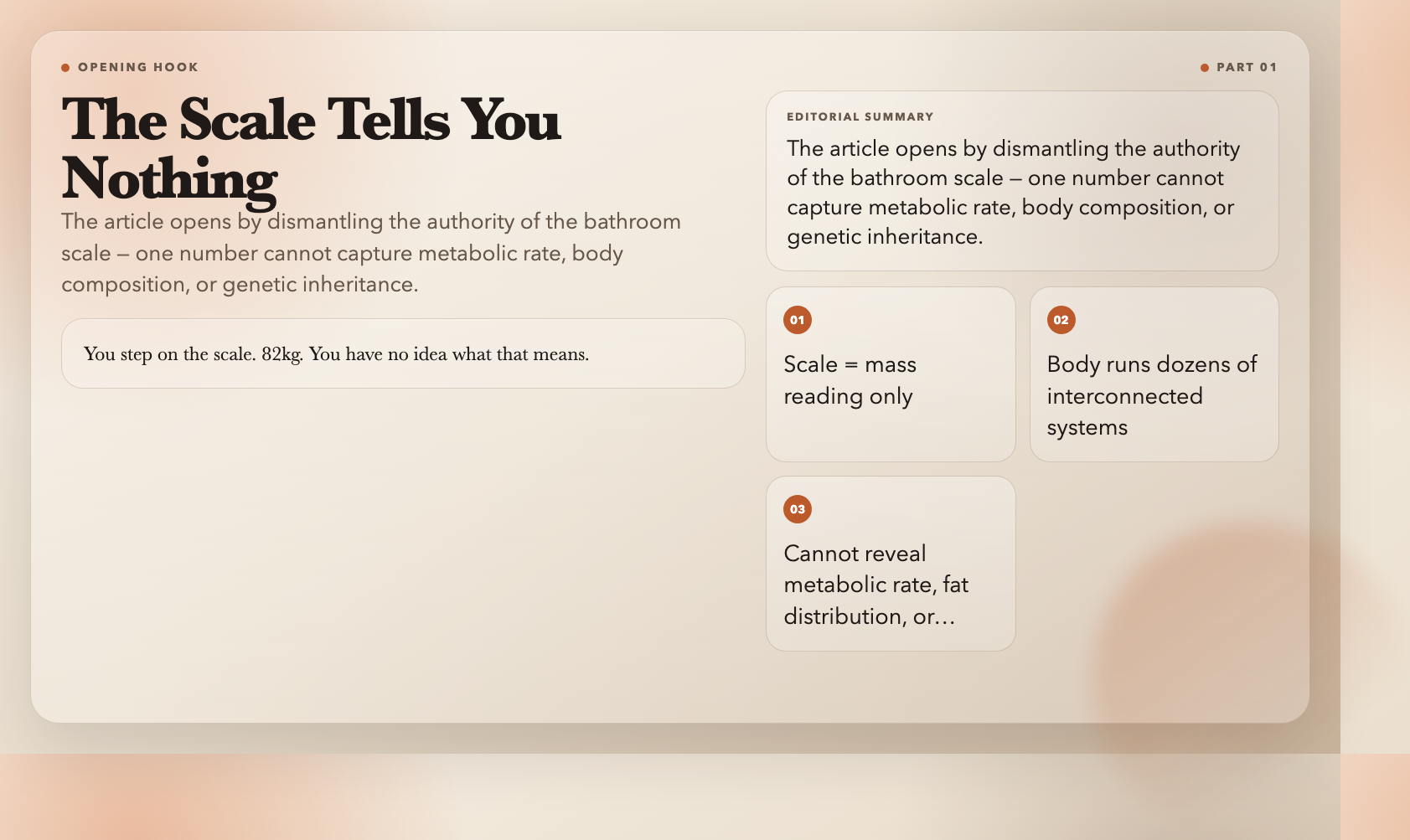
You step on the scale. 82kg. You have no idea what that means.
Your body runs dozens of interconnected systems — metabolic rate, body composition, visceral fat distribution, genetic inheritance patterns. The scale gives you a mass reading. It cannot tell you if that mass is muscle or fat, whether your resting burn is 1,400 or 1,900 calories, or what blood types your children might inherit. These eight free calculators do.
#
BMI Calculator
Body Mass Index divides your weight by the square of your height. Ancel Keys introduced the formula in 1972 after studying 7,400 men across five countries. It became clinical shorthand for body composition risk — not because it is precise for individuals, but because it correlates reliably across populations.
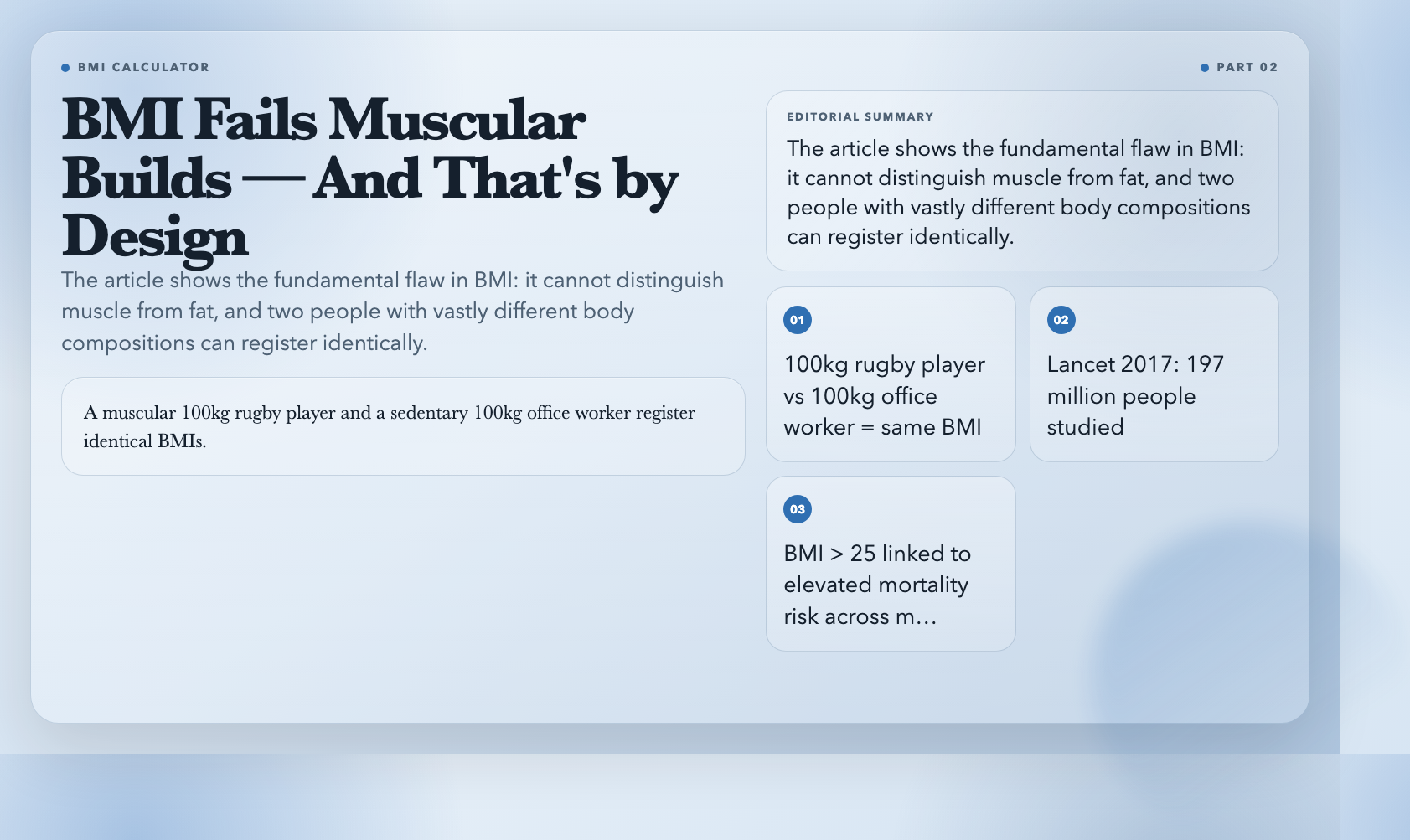
The limitations are real. A muscular 100kg rugby player and a sedentary 100kg office worker register identical BMIs. The formula cannot distinguish between them. But in the 2017 Lancet meta-analysis of 32 studies covering 197 million people, BMI above 25 tracked consistently with elevated mortality risk across nearly every cause-of-death category. Underweight, below 18.5, carries its own risks — osteoporosis, immune deficiency — confirmed in longitudinal studies at Harvard and the National Institutes of Health.
The BMI Calculator returns your number, a category, and health context. Three inputs. One fact you can act on.
#
BMR Calculator
Basal Metabolic Rate is what your body burns at complete rest. Breathing, circulating blood, maintaining brain activity. BMR represents 60–75% of total daily energy expenditure for most adults — the remaining 25–40% comes from movement and the thermic effect of food.
The BMR Calculator uses weight, height, age, and gender with the Mifflin-St Jeor equation — the most accurate formula for typical body types. If you burn 1,500 calories at rest and eat 2,300, you run an 800-calorie daily surplus. That compounds to roughly 700g of stored fat per week without entering a gym.
#
Body Fat Calculator (US Navy)
BMI fails for muscular builds. The US Navy created its own estimation method during World War II — a formula using neck and waist circumference (plus hip for women) that works without any equipment.
The Body Fat Calculator (US Navy) estimates body fat percentage with accuracy close to DEXA scans. A 75kg man at 12% body fat and a 75kg man at 28% have completely different metabolic profiles. The scale cannot show this. This calculator does. Healthy ranges: roughly 10–20% for men, 18–28% for women.
#
Body Adiposity Index Calculator
The Body Adiposity Index was designed as a weight-independent alternative for people whose weight fluctuates from thyroid conditions, medications, or water retention.
The Body Adiposity Index Calculator estimates body fat from hip circumference and height. Hip circumference does not swing overnight from fluid fluctuation the way scale weight does. It returns a percentage with category ranges.
#
TDEE Calculator
Total Daily Energy Expenditure is BMR multiplied by an activity factor. It tells you what you actually burn living your life — commuting, cooking dinner, running on Sundays.
The TDEE Calculator asks for weight, height, age, gender, and activity level. A 30-year-old, 75kg man exercising three times weekly lands around 2,500–2,700 calories per day. Eat 500 below that consistently and you lose roughly 500g per week. The math is imperfect — biology always is — but it beats guessing from how you feel.
#
Calorie Burned Calculator
Running and walking the same distance burn different calories. Swimming outperforms cycling at comparable effort. Strength training burns fewer calories during the session but elevates metabolism for hours afterward through excess post-exercise oxygen consumption.
The Calorie Burned Calculator takes your weight, activity type, duration, and intensity. A 70kg person cycling moderately for 45 minutes burns about 350 calories. Swimming vigorously for 30 minutes burns around 400. These numbers explain why that casual walk you logged as exercise barely registered.
#
Waist-to-Height Ratio Calculator
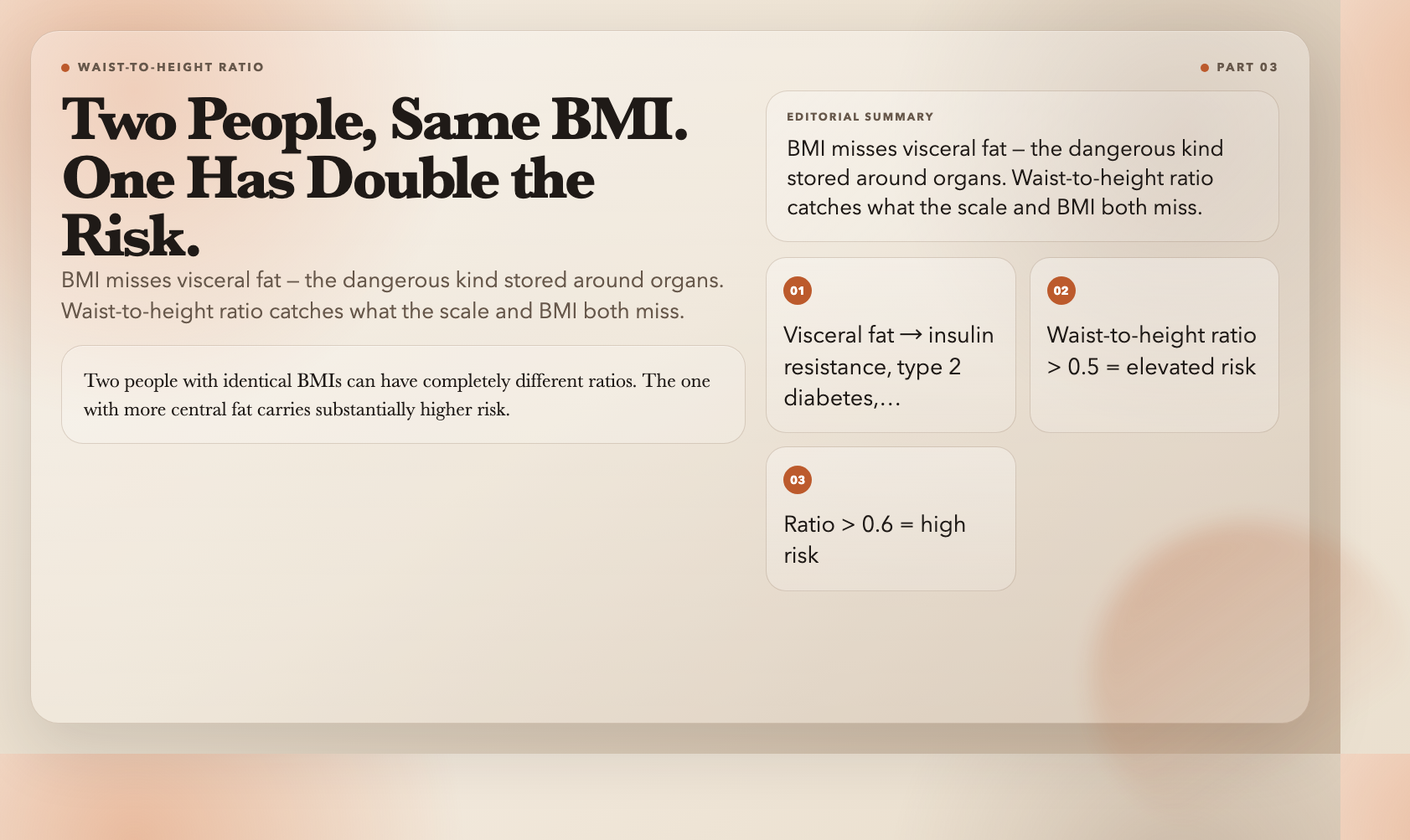
BMI treats all fat equally. Visceral fat — stored around abdominal organs — is metabolically distinct from subcutaneous fat stored under the skin. Visceral fat correlates strongly with insulin resistance, type 2 diabetes, and cardiovascular disease, as shown in studies published in Circulation and the Journal of the American College of Cardiology.
The Waist-to-Height Ratio Calculator divides waist by height. Above 0.5 means elevated cardiometabolic risk. Above 0.6 means high risk. Two people with identical BMIs can have completely different ratios. The one with more central fat carries substantially higher risk — at the same weight. This number captures what BMI and the scale both miss.
#
Blood Type Calculator
Blood type is determined by the ABO gene and the Rh factor. Each parent contributes one allele, which means a child’s possible blood types can be predicted with specific probabilities.
The Blood Type Calculator asks for each parent’s blood type and Rh factor. It returns every possible blood type for the child and the probability of each. An Rh-negative mother carrying an Rh-positive baby can develop Rh incompatibility — her immune system attacks the baby’s red blood cells. It is preventable with proper screening and intervention. Knowing the risk is the first step.
#
The Numbers You Track Are the Ones You Can Change
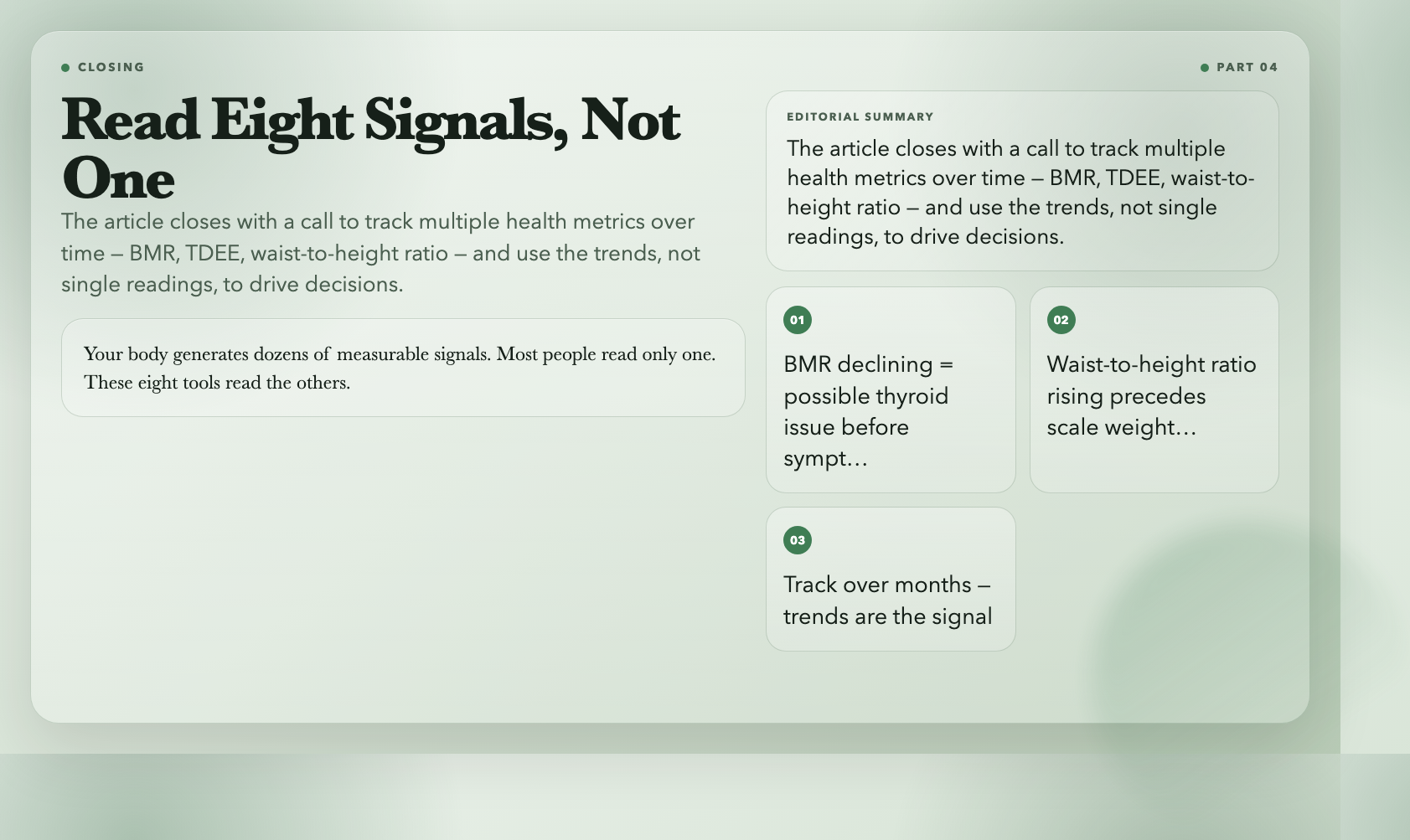
BMR shows idle speed. TDEE shows daily burn. Waist-to-height ratio shows fat distribution. Blood type shows genetic inheritance patterns you cannot change but can plan around.
The insight emerges over months. BMR declining gradually might signal thyroid dysfunction before symptoms surface. Waist-to-height ratio creeping up precedes scale weight gain by months. TDEE shifting after a training block reveals body composition changes the mirror has not caught yet.
Your body generates dozens of measurable signals. Most people read only one. These eight tools read the others.