The landscaping invoice does not explode because multiplication is hard. It explodes because one missing inch of depth turns a 120 sq ft bed from a tidy weekend chore into another bulk bag in the driveway.
For example, a 10 ft by 12 ft bed at 3 in deep is roughly 30 cubic feet, or a little over 1 cubic yard. Push the same bed to 4 in and the order jumps to 40 cubic feet, about 1.5 cubic yards before waste, compaction, or settling. Bark mulch, pea gravel, and loose topsoil may share the same footprint, but they do not create the same order. One is light and springy, one is dense enough to punish a driveway, and one settles after raking.
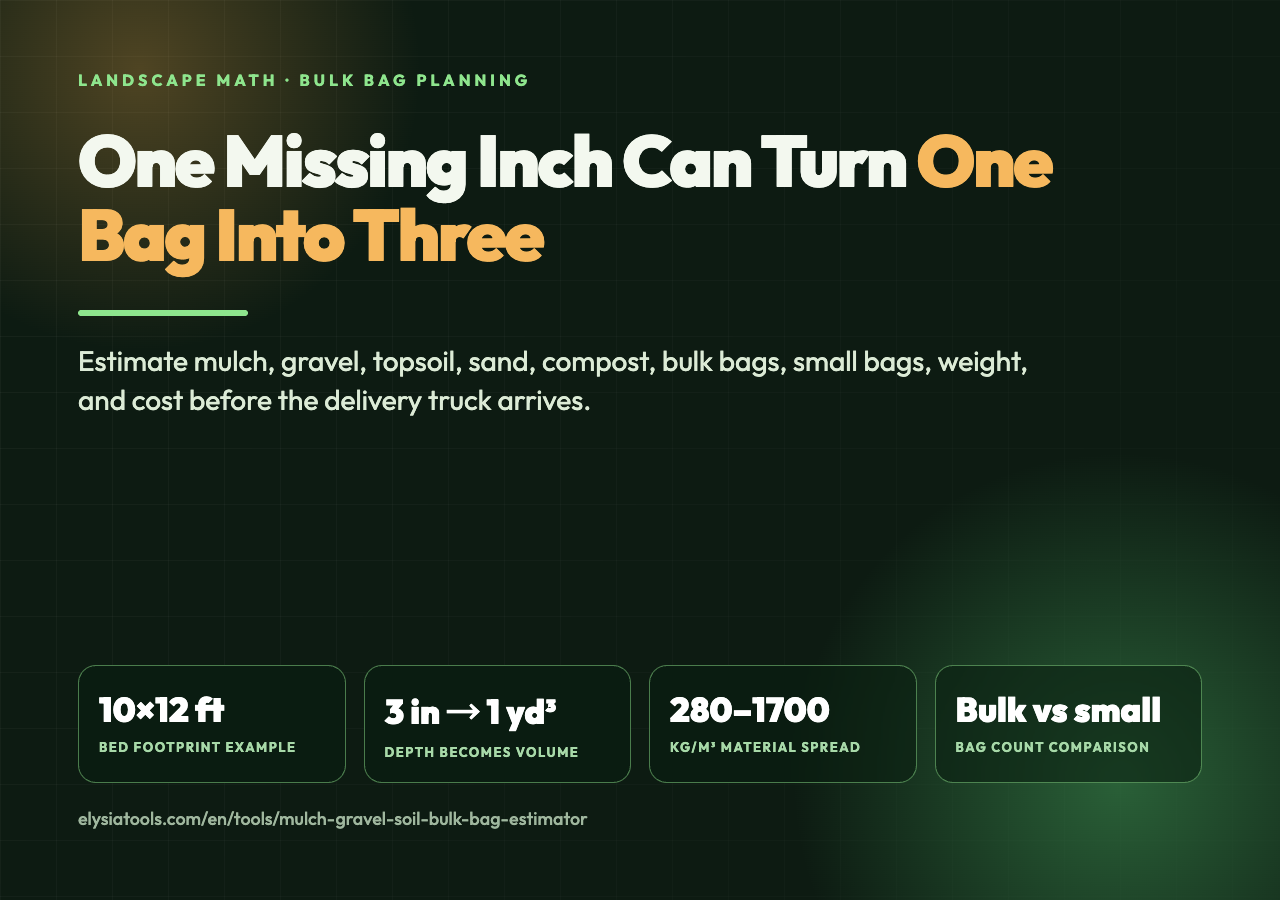
The Mulch Gravel Soil Bulk Bag Estimator is built for that chain of decisions. It lets you pick bark mulch, wood chips, pea gravel, crushed stone, river rock, loose or screened topsoil, sand, compost, or a custom density, then converts a shaped bed and a target depth into cubic meters, liters, cubic yards, cubic feet, kilograms, pounds, tonnes, bulk bags, small retail bags, and optional cost.
The best use of the estimator is not to get a decorative number for a quote. It is to make the ordering conversation less fuzzy before you call the supplier.
The real job is depth discipline
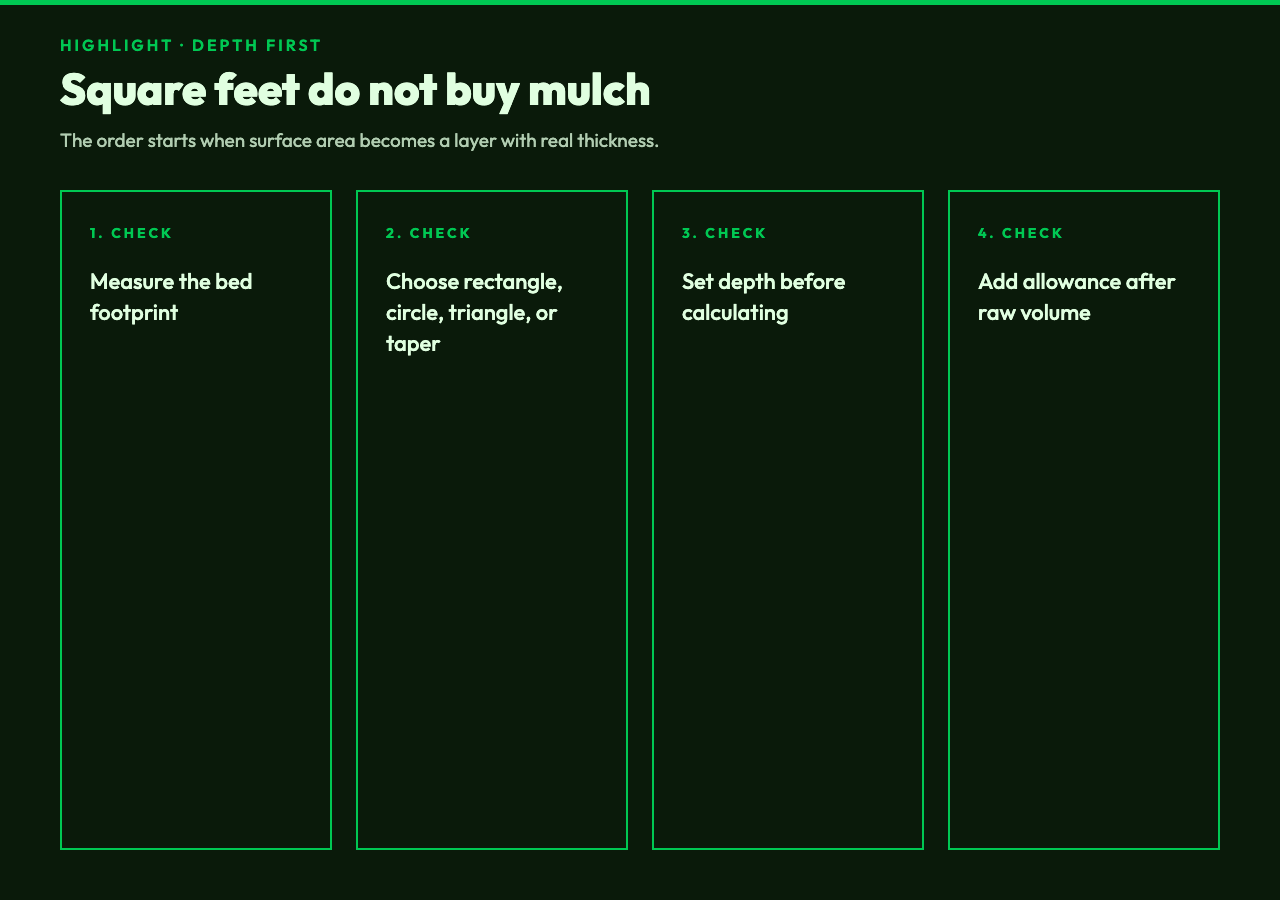
Most garden material mistakes happen because people talk in square footage when the supplier sells volume. A 10 ft by 12 ft bed sounds like a single number: 120 square feet. But the order changes sharply when the layer is 2 in, 3 in, 4 in, or 6 in deep.
That depth choice is not cosmetic. Bark mulch is often used around 5-10 cm to suppress weeds and hold moisture. Pea gravel paths may sit in the 4-8 cm range over a membrane. Loose topsoil for a new bed can be 15-30 cm because the goal is root volume, not surface dressing. Compost may only need a thin 2-8 cm top-dressing if it is being worked into existing soil.
So the first useful question is not, How many bags do I need? It is, What layer am I actually trying to build? Once that is clear, the math becomes honest: area multiplied by depth gives raw volume, and raw volume plus a waste or compaction allowance gives the orderable amount.
The estimator makes that explicit. A rectangular bed uses length and width. A circular feature uses the diameter. A triangular corner bed cuts the rectangle in half. A tapered bed or border uses a second depth so you do not pretend the shallow end and deep end are the same. That small shape choice prevents a surprisingly common over-ordering error: applying a rectangle formula to a bed that is closer to a wedge.
Volume is only half the order
Landscape suppliers may quote a cubic yard, a cubic meter, a 1 m3 bulk bag, a 1 yd3 bag, a tonne, a pallet of small bags, or a delivery minimum. The estimator deliberately shows several units at once because the person measuring the bed and the person selling the material may not speak the same unit language.
If you already know your bed size but need to normalize square meters, square feet, acres, or hectares before entering the shape, the Area Unit Converter is the cleaner first step. If the supplier gives a weight quote after you calculated volume, the Weight Unit Converter keeps kilograms, pounds, ounces, and tonnes from becoming a second source of error.
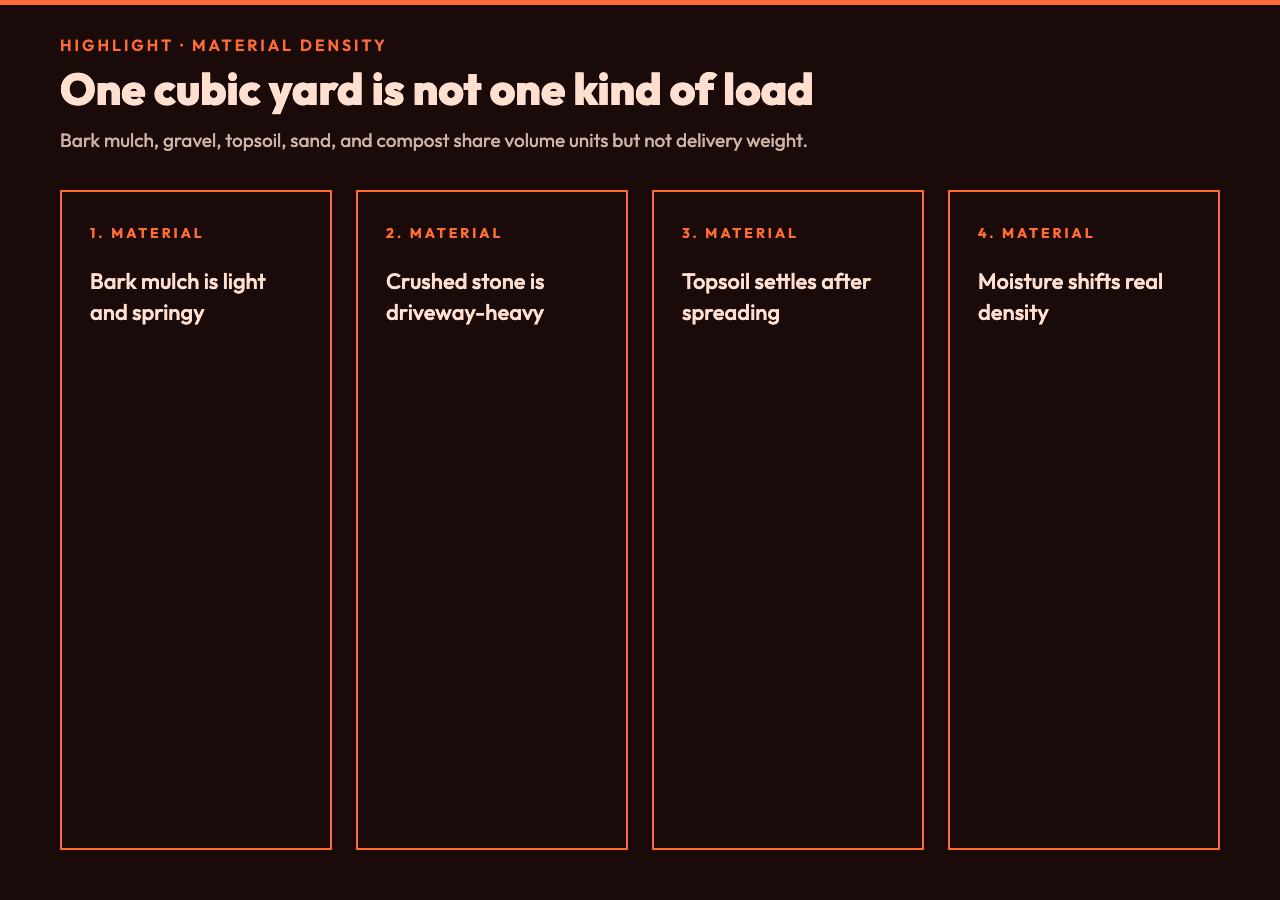
The material density table is where the estimate stops being a generic volume calculator. Bark mulch can sit around 280 kg/m3. Wood chips may be closer to 350 kg/m3. Pea gravel is often around 1600 kg/m3. Crushed stone can be heavier still. Compost, topsoil, and sand each have their own typical bulk behavior, and moisture can move the real number.
That is why the tool reports both volume and mass. The delivery question for three cubic yards of bark mulch is not the same as three cubic yards of crushed stone. One may feel like a normal garden job. The other may change the delivery vehicle, driveway access, and whether you want the pile dropped exactly where it will be spread.
Bulk bags beat small bags when the threshold is visible
Retail bags are convenient because they make the purchase feel granular. The trap is that the count can get ridiculous before the project feels large. A modest bed can turn into dozens of 40 L bags or 2 ft3 bags once depth and allowance are included.
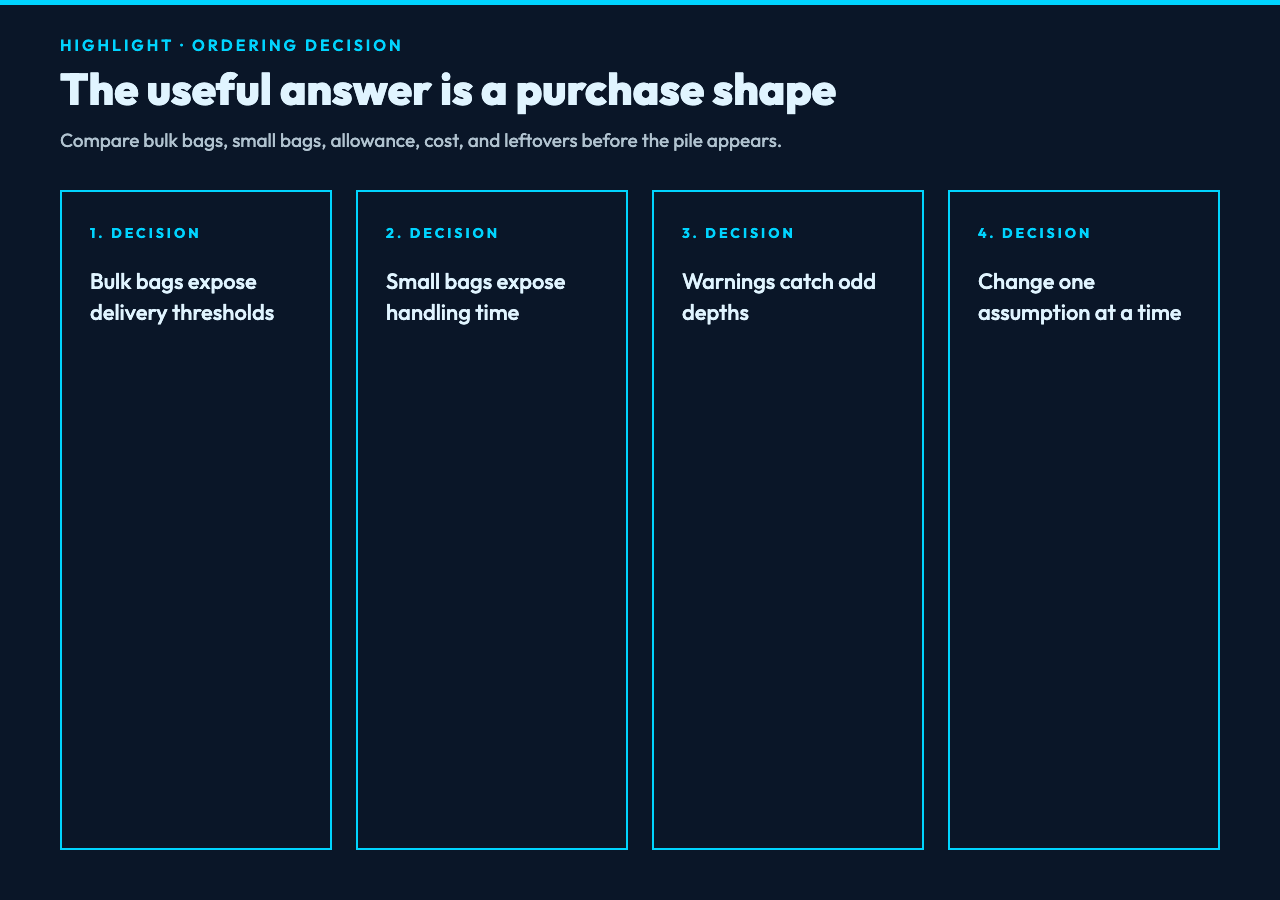
The bulk bag estimator puts the small-bag count next to the 1 m3 or 1 yd3 count so the threshold becomes visible. If the result says 51 small bags but 2 bulk bags, the decision is no longer abstract. You can compare delivery fee, handling time, storage space, and whether carrying individual bags through a side gate is worth the convenience.
It also handles optional price fields. Enter a bulk-bag price and a small-bag price, and the result exposes a simple but practical tradeoff: the lower unit price of bulk delivery versus the lower commitment and easier leftovers of retail bags. That comparison is often more useful than a perfect decimal volume, because a supplier will not sell 1.37 bulk bags. You buy 2, and the extra material needs a place to go.
The allowance field is another place where the tool is intentionally boring. A 5-15 percent allowance can be reasonable for irregular edges, settling, raking loss, and compaction. A 30 percent allowance may be defensible for a messy excavation, but it should trigger a second look. The estimator warns when the allowance is unusually high or when the chosen depth is outside typical guidance for the material.
Use it as a conversation tool, not a verdict
The numbers are strongest when they are treated as a prepared estimate, not as a courtroom ruling. Real bulk density changes with water content, grading, supplier screening, and how the material is loaded. A wet bag of topsoil is not a dry lab sample. River rock from one yard may not match river rock from another.
That does not make the calculation useless. It makes the calculation a better starting point. You can tell the supplier the bed shape, the dimensions, the intended depth, the material, the allowance, and the volume range you computed. That is a much better conversation than asking, How many bags do I need for my front garden?
If the project is indoors or tile-based rather than loose landscape material, the adjacent problem is coverage rather than bulk density; the Tile Coverage Estimator handles tile size, layout waste, grout, and room area in a way a mulch calculator should not. If your problem is mostly a measurement conversion before the estimate, the Length Unit Converter is a safer place to clean up feet, inches, meters, and yards before they enter the material calculation.
The practical workflow is simple: measure the bed, choose the nearest shape, decide the layer depth before touching the calculator, pick the material, add a realistic allowance, then compare bulk and small-bag options. If the result surprises you, change one assumption at a time. The surprise is usually where the real project decision was hiding.
The pile should not be a surprise
Ordering mulch, gravel, soil, sand, or compost feels like a weekend errand until the pile lands in the driveway. At that moment, the difference between a surface estimate and a material estimate becomes physical. The question is not whether the calculator can multiply length by width by depth. The question is whether you know the order you are really placing: one bulk bag or three, a light pile or a driveway load, a tidy leftover or an awkward mound. The point is to make that choice before the truck arrives.
Explore more tools at elysiatools.com.